What to Order for Someone Sensitive to Floral Scents
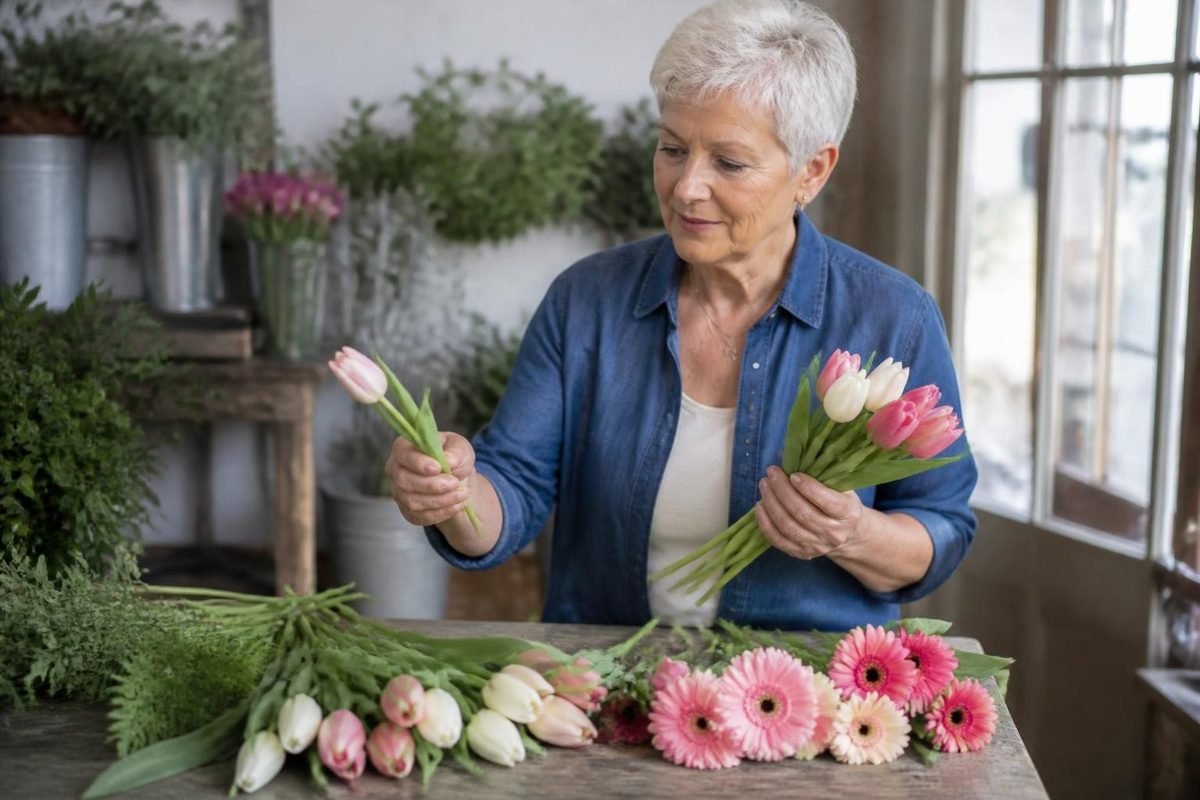
Order an arrangement made with flowers that have little noticeable scent, and ask the florist to leave out fragrant foliage, scented products, and sprays. Before ordering, check what the recipient can tolerate, because sensitivity varies and no flower is guaranteed to be scent free.
Choose flowers with a mild scent
Some flowers are less likely than others to fill a room with fragrance. Florists often use tulips, gerbera daisies, and many orchids for their appearance rather than their perfume. Even so, scent can vary by variety, and a flower that seems mild to one person may be noticeable to another.
Ask the florist to check the actual flowers available rather than relying only on the flower name. You can request a small arrangement with fewer stems, which may be easier to place away from a desk or bed. A large display gives the recipient less flexibility, especially in a small room.
Flowers and foliage to discuss with the florist include:
- Tulips: Often chosen for their clean shape and relatively subtle scent.
- Gerbera daisies: A colorful option that is not generally known for a strong floral fragrance.
- Orchids: Many have little noticeable scent, though some varieties are fragrant.
- Green foliage: Ask for leaves without a strong aroma and avoid eucalyptus if its scent is a concern.
Do not assume that every variety on this list will be suitable. If the recipient reacts to even faint smells, a flower arrangement may not be the safest choice.
Give the florist clear instructions
Explain that the recipient is sensitive to fragrance, not simply that you prefer a subtle arrangement. Ask for no lilies, strongly scented roses, hyacinths, or other flowers the florist finds fragrant. Request no perfume, scented packaging, or added fragrance in the arrangement.
It also helps to specify that substitutions should meet the same scent requirement. If the preferred flowers are unavailable, ask the florist to contact you before replacing them. That gives you a chance to choose a different gift instead of sending something unsuitable.
If the recipient has an allergy, ask what causes their symptoms. Fragrance sensitivity and pollen allergy are not the same thing, and a flower with little scent is not necessarily free of pollen. For a medical concern, follow the recipient's own guidance rather than treating a florist's recommendation as medical advice.
Consider an alternative to cut flowers
For someone who cannot tolerate floral smells, a nonfloral gift may be more considerate. A card, a book, or another item suited to the person's interests avoids the uncertainty of a bouquet. If you are considering a plant, check first: plants and their soil may also be unwelcome in some homes or workplaces.
For a hospital or shared setting, check the location's rules before sending flowers or plants. The recipient may also prefer to receive a gift at home, where they can decide where to put it.
The best order is one the recipient is comfortable keeping nearby. A brief check with them can prevent a thoughtful gift from becoming a source of discomfort.
Related reading: https://tencowmedia.com/local-seo-lessons-from-independent-flower-shops/
Ends · BLOOMJOURNAL64